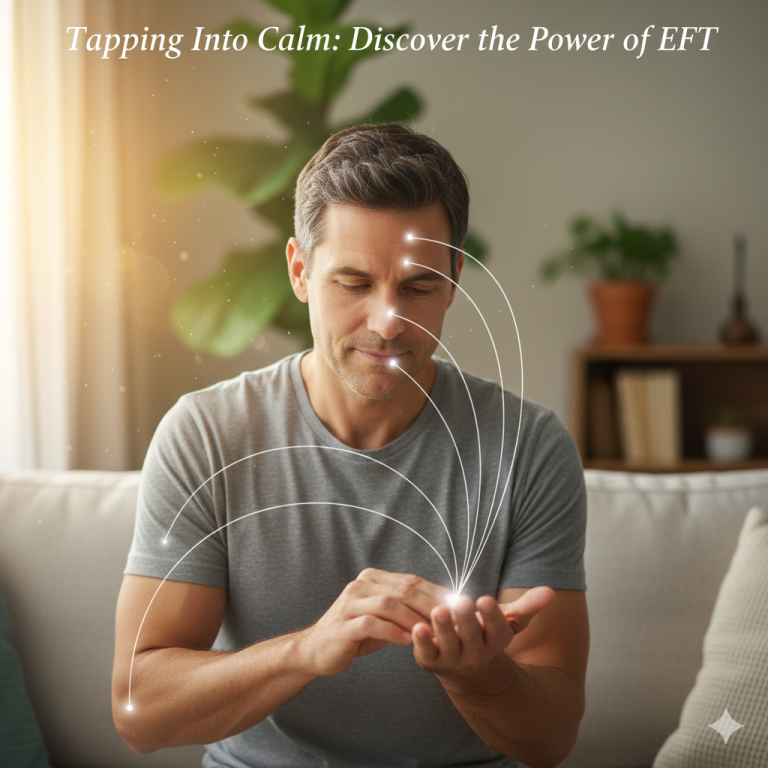
Tapping Into Calm: Discover the Power of EFT (Emotional Freedom Technique)
by Shipra A.
In our fast-paced world, finding moments of peace and calm can feel like a constant challenge. We’re often told to meditate, breathe
deeply, or practice mindfulness – and while these are all wonderful tools, sometimes we need something a little more hands-on.
Enter Tapping Meditation, officially known as the Emotional Freedom Technique (EFT). It's a surprisingly simple yet profoundly
effective practice that involves gently tapping on specific meridian points on your body while focusing on a particular emotion,
challenge, or goal. Think of it as acupuncture without the needles, combined with elements of cognitive therapy and self-acceptance.
Intrigued? Let’s dive in.
What Exactly is Tapping Meditation (EFT)?
EFT is based on the premise that negative emotions are caused by a disruption in the body's energy system. These disruptions can
manifest as stress, anxiety, fears, limiting beliefs, and even physical discomfort.
The technique involves:
- Identifying the Problem: Clearly defining the specific issue you want to address (e.g., "this feeling of overwhelm," "my fear of public speaking," "this tension in my shoulders").
- Rating the Intensity: Assigning a number (0-10) to how intensely you feel the emotion or problem. This helps you track your progress.
- The Setup Phrase: A simple statement that acknowledges the problem while affirming self-acceptance. It usually follows the format:
"Even though I have this [problem/emotion], I deeply and completely accept myself."
The Tapping Sequence: Using your fingertips to tap about 5-7 times on a series of nine specific meridian points on your body, while
repeating a "reminder phrase" about the problem.
The idea is that by tapping on these energy points while focused on the issue, you send calming signals to your brain, particularly the
amygdala (our brain's alarm center). This helps to dissipate the emotional charge associated with the problem, allowing your nervous
system to relax and rebalance.
The Science-Backed Benefits
While it might seem unconventional at first, a growing body of research supports EFT's effectiveness. Studies have shown tapping can:
- Reduce Stress and Anxiety: By calming the amygdala and hippocampus, it lowers cortisol (the stress hormone) levels.
- Alleviate Symptoms of PTSD: Helping individuals process traumatic memories without being re-traumatized.
- Improve Performance: Reducing performance anxiety for athletes, public speakers, and artists.
- Manage Pain: Addressing the emotional component often linked with chronic physical pain.
- Break Bad Habits & Cravings: Helping to shift the emotional drivers behind addictive behaviors.
- Boost Self-Esteem: Releasing limiting beliefs and fostering self-acceptance.
My Moment of Calm: Tapping Away Presentation Jitters (Personal Anecdote)
The first time I really believed in tapping was right before a major presentation. I was backstage, heart hammering, with that classic
dry-mouth feeling—a solid 8 out of 10 on the anxiety scale.
Instead of trying to force myself to 'be calm,' I decided to tap. For five minutes, I focused on the phrase, "Even though I have these
overwhelming nerves and fear of messing up, I deeply and completely accept myself." As I moved through the points on my face and
body, I felt a physical shift. My breath deepened, my shoulders dropped, and when I re-rated my anxiety, it was down to a 3.
It wasn't that the nerves disappeared entirely, but they transformed from debilitating fear into manageable energy. I walked onto that
stage feeling grounded, not terrified, and that, for me, was proof that this strange little technique works.
Ready to Try It? A Simple Tapping Sequence
Here's a basic guide to get you started with a simple tapping meditation session.
1. Identify Your Issue & Rate It: Think of something that's causing you mild stress or a negative emotion right now. For example, "I feel overwhelmed by my to-do list." Rate the intensity on a scale of 0-10, where 10 is the highest.
2. The Setup Phrase (Tap on the Karate Chop Point): With two or three fingers, gently but firmly tap on the "Karate Chop Point" (the fleshy part of your hand opposite your thumb, on the side of your little finger). Repeat the following phrase three times:
"Even though I feel this overwhelm about my to-do list, I deeply and completely accept myself."
3. The Tapping Sequence (Repeat Your Reminder Phrase): Now, move through the following points, tapping about 5-7 times on each. As you tap, simply say a "reminder phrase" about your issue, like "this overwhelm" or "my to-do list overwhelm."
- Eyebrow: Just above the inner corner of your eyebrow.
- Side of Eye: On the bone at the outside corner of your eye.
- Under Eye: On the bone directly under your pupil.
- Under Nose: Between your nose and upper lip.
- Chin: In the crease between your lower lip and chin.
- Collarbone: Just below the knob of your collarbone, moving slightly out towards your shoulder.
- Under Arm: About four inches below your armpit, on your side.
- Top of Head: The crown of your head.
4. Breathe & Re-evaluate: Take a deep breath. Now, go back and re-rate the intensity of your overwhelm on a scale of 0-10. Has it shifted? You might feel a sense of lightness, a deeper breath, or simply a lower number.
You can repeat the sequence if needed, adjusting your setup and reminder phrases to reflect any changes in how you feel (e.g., "Even though I still feel some overwhelm, I choose to feel calm").
Why Tapping Works (And Why You Should Try It)
One of the beautiful things about EFT is its accessibility. You don't need special equipment, endless hours, or even a quiet room. You
can tap discreetly almost anywhere. It empowers you to take an active role in managing your emotional landscape, offering immediate
relief and, with consistent practice, profound shifts in your well-being.
If you’ve been searching for a practical, effective tool to help you navigate the stresses of life, tapping meditation might just be the
gentle, powerful solution you’ve been looking for. Give it a try – your nervous system will thank you!
.